Mustard Seeds

All natural heirloom mustard seeds for planting.

Free Shipping in USA

Mustard

All seeds are grown 100% naturally.
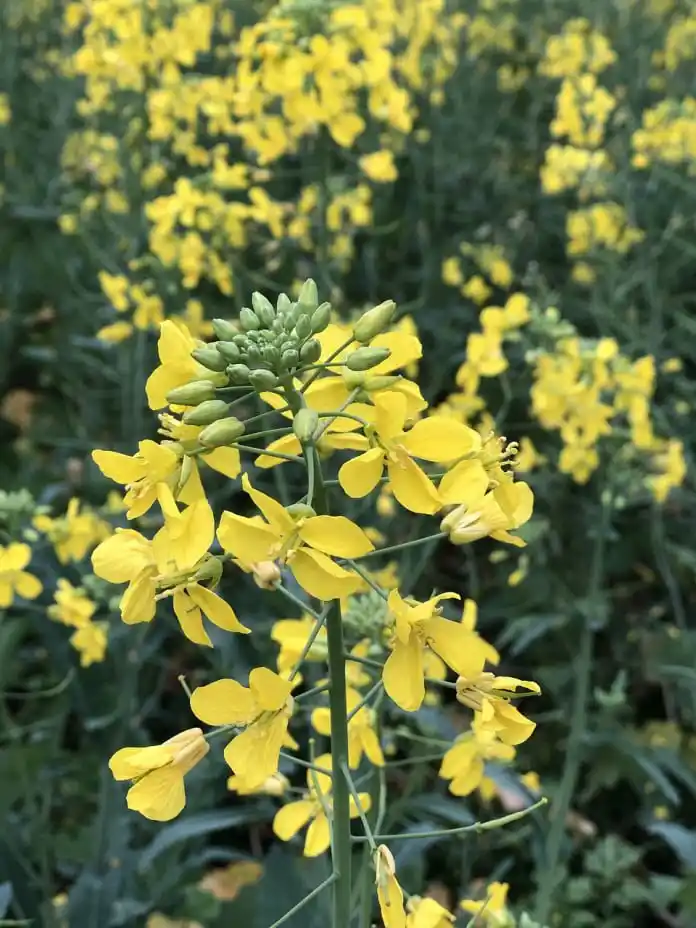
mustard flowers

Mustard

(Brassica juncea)
150-200 seeds
SKU: MUS-1-200

Extremely high in minerals, mustard leaves are eaten as a cooked green. Seeds are easily ground in the blender with vinegar to make the condiment mustard. This is a brown seeded variety great for making dijon type mustards. 

$4.00

Bulk 600-800 seeds = $15

Bulk 2400-3200 seeds = $55

Mustard
Mustard belongs to the Cruciferae family which is thought to have originated in the Mediterranean area. It was in India & the Orient that the forms we are familiar with today were developed including black mustard (Brassica nigra), brown mustard (B. juncea), & white mustard (Sinapis alba). 
Mustard greens are a popular culinary delight in the American South, & were a staple in many parts of the United States up until a few decades ago. We are not exactly sure why they lost much of their popularity outside the American South, but there have been times throughout history when the highly nutritious vitamin & mineral packed greens have sustained families exclusively. Ease of growing & unmatched productivity put mustard greens at the top of the list when it comes to plants that deserve a place in every backyard garden.
Seeds from the mustard plant are edible as well & actually seem to hold more popular opinions & see more use than the greens from the same plant. Ground & mixed with vinegar, powdered turmeric rhizome & water, white mustard seeds are transformed into the super popular condiment we are all familiar with, yellow mustard. Seeds from brown or black mustard plants are ground & mixed with vinegar & water to produce Dijon & other spicy mustard condiments. Mustard seeds are also added whole to brine used in the making of pickles.
Mustard plants are used in phytoremediation to remove heavy metals from soil. Mustard can be purposefully planted in contaminated areas such as hazardous waste sites to draw heavy metals such as lead & cadmium from the soil. Plants are then properly disposed of & the land can eventually be reclaimed.
Plenty of common insect pest can plague a mustard population, but often times nature takes care of the issue without your intervention. Aphids & flea beetles are almost always present to some degree. White rust is also a relatively common occurrence as well as downy mildew. The good news & the saving grace is that mustard greens are an extremely fast producer. So fast that most of the common issues that you are going to encounter don’t have time to cause enough damage to negatively affect the crop to the point of needing intervention. If a problem persist to the point of excessive damage to the crop, removal & destruction (burning) is the best corse of action. Replanting is much easier than attempting to salvage the planting in most cases.

Our Mission

"Mississippi Foundation for Renewable Energy's mission is to promote sustainable lifestyles. We accomplish this by providing informative assistance in the form of consultation, as well as providing a unique product line geared toward homesteaders & "big city" dwellers alike. We are world leaders in off-grid renewable energy & alternative communications system design. We support the preservation of natural, non-GMO, open pollinated plant life, & donate tens of thousands of seeds each year to seed library programs across the USA. All proceeds from our website https://www.backwoodsenergy.org are utilized in our effort to fulfil our mission of promoting sustainable lifestyles worldwide." 

Days Until Spring (vernal equinox)

Help us spread sustainability
Share this Page!

Contact us

Our customer support team is here to help you.

Email

We will reply as soon as possible.

Phone

We work hard & can't always get to the phone, so leave us a message & we will call back as soon as possible.