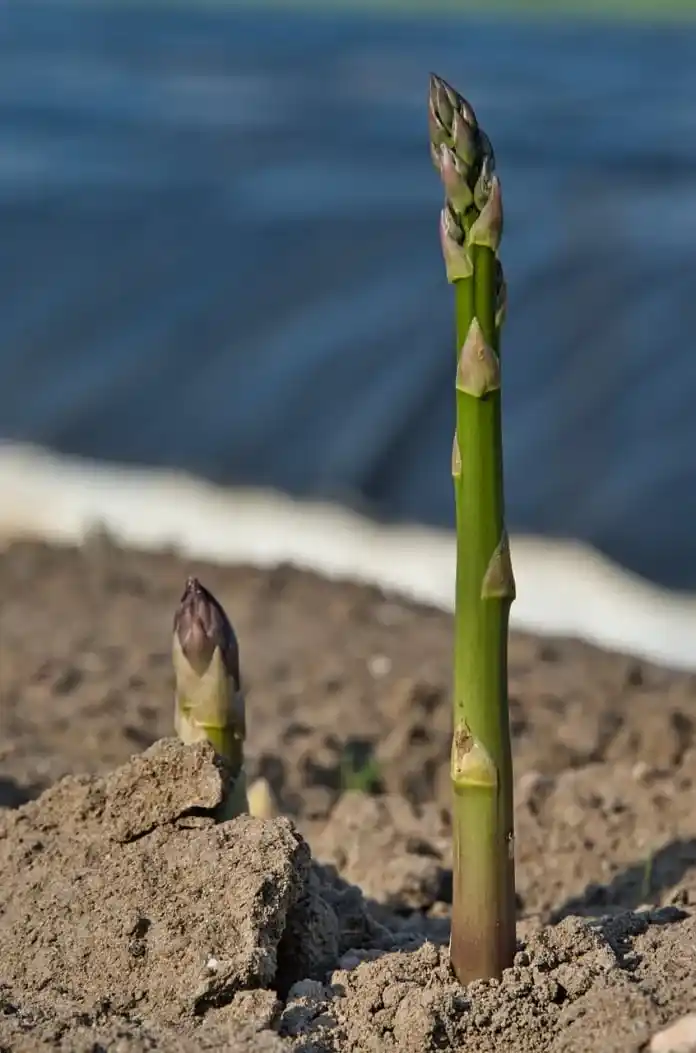
Asparagus
(Asparagus officinalis)
Asparagus is one culinary delicacy that has been around for a very long time. Enjoyed by the Egyptians, Greeks & Romans as dish reserved for the wealthy elite, asparagus spread across Europe & arrived in England in the 1650’s. It was brought to the United States when settlers arrived on the East Coast.
Asparagus thrives in USDA Hardiness Zones 3-10, with the cooler zones often out performing the warmer ones. The reason for this is quite complex, & has to do with the plants root system. Consisting of feeder roots, rhizomes & fleshy storage roots, its buds on the rhizomes that produce the shoots (spears) that we consume. The energy used to produce these shoots is derived from the sun through photosynthesis & stored in the storage roots during the growing season. Warm sunny days coupled with cool nights causes the production of more carbohydrates than the plant requires for growth. Excess carbohydrates are stored in the fleshy storage roots & utilized for shoot production. Excessive carbohydrate production is inhibited by the warm days & nights associated with the more temperate zones, so a somewhat lesser harvest is sometimes encountered.
Plant asparagus seeds in a cellular tray (84 cell liners work well) filled with a quality starter soil mix, eight to twelve weeks before average last frost for your area. Plant one seed per cell about ¼ inch deep & water in thoroughly. Seeds can germinate in temperatures between 60°-84°F, with 75°F being ideal. Sometime between two & eight weeks from planting the seeds will sprout into fine wispy seedlings. Allow the seedlings to fill the cells with roots before transplanting to their final location.
A four foot wide raised bed in full sun is the ideal place to grow asparagus. The bed can be as long as you want dependent on your needs. Asparagus spreads like wildfire & is capable of naturalizing, so containment may be necessary. Spreading occurs underground as well as by seed. Seed is produced by female plants which can be easily removed from the planting if one desires. Underground spreading of rhizomes is controlled by growing in a raised bed. If space is not an issue, spreading & naturalization can be a good thing. Your bed should be at least twelve inches deep & filled with soil that will drain well.
When its time to plant your seedlings in their final location, bury them with the soil line of the seedling matching the soil line of the planting medium. Seedlings should be spaced six to eight inches apart.
There are little to no pest issues with asparagus. Cutworms can be a nuisance, but rarely require mediation. Grasshoppers like to feed on the ferns sometimes, but will not cause any problems unless a serious infestation occurs. Asparagus beetles are uncommon in most areas, but can become a problem if they go unnoticed. Check for asparagus beetles as soon as shoots start to emerge in spring & watch for them throughout the growing season. Adult beetles are ¼-inch long with oval-shaped bodies and moderate-length antennae. The adult common asparagus beetle (Crioceris asparagi) is bluish-black with six cream-colored spots on its back. Adult spotted asparagus beetles (Crioceris duodecimpunctata) are reddish-orange with twelve black spots.
Refrain from harvesting until the start of the third season. Two seasons are needed for the plants to become established. Harvest by cutting shoots just above ground level with a sharp knife. Limit harvesting to four weeks in the first season (third year), & then let the plants produce ferns for photosynthesis during the rest of the growing season. In consecutive seasons, limit harvesting to no more than eight weeks.